

“I just took my medicine and forgot; I paid for groceries but left them behind…”
In endocrinology clinics, we sometimes hear patients with diabetes describe their daily lives this way. Many people assume this is a natural part of “getting older,” but in fact it may be long-term high blood sugar quietly damaging the brain, manifesting as memory loss and slowed reactions — symptoms that often signal diabetes-related cognitive dysfunction.
1 #
Memory loss in people with diabetes:
an overlooked risk of cognitive decline and dementia
As one of the chronic complications of diabetes in older adults, diabetes-related cognitive dysfunction can be classified by severity into a “latent stage” (brain already damaged but symptoms not yet evident), mild cognitive impairment (MCI), and dementia. Because early symptoms are subtle and most people attribute them to aging, they are often overlooked — which has contributed to rising disease prevalence. Among people with diabetes, the risk of mild cognitive impairment and dementia is 1.4–1.6 times and 1.5–2.5 times that of people without diabetes, respectively, and diabetes also accelerates the progression from MCI to dementia.

2 #
Mild cognitive impairment:
a “golden window” for intervention that must not be missed
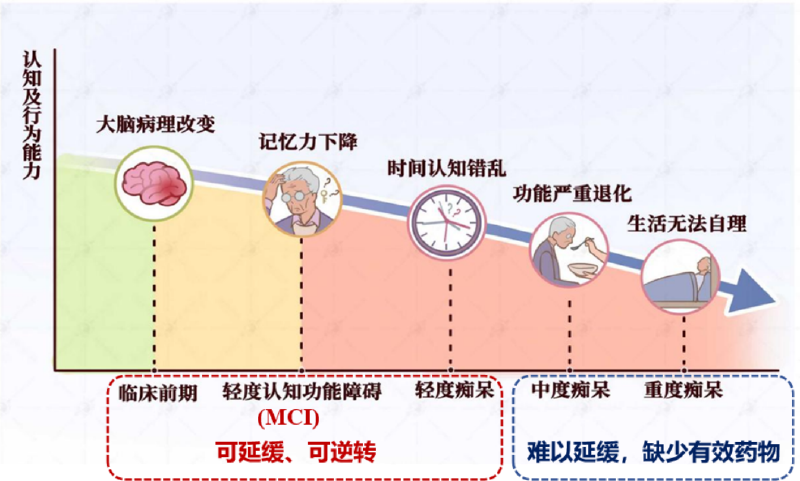
Diabetes-related cognitive dysfunction has an insidious onset, and no effective drugs currently exist to delay or reverse the disease course — therefore early detection, early diagnosis, and early intervention are key. MCI is a transitional state between normal aging and dementia, in which noticeable changes in cognitive and behavioral abilities already appear and can serve as an early warning signal for cognitive disorders. Although the symptoms are atypical, this is the “golden window” for intervention. Proactive early screening is therefore especially important: professional cognitive assessment tools and examinations provide a “precision check-up” for the brain, enabling more individualized management plans.
Ten warning signs of cognitive dysfunction

3 #
The “Diabetes-Related Cognitive Disorders Specialty Consortium”:
a coordinated network for “brain protection in diabetes”
Supported by national major research programs and high-level talent projects, the Department of Endocrinology at Nanjing Drum Tower Hospital has built a comprehensive management system for diabetes-related cognitive disorders based on “early screening and warning – precise stratification – joint protection of the diabetic brain.” The related achievements have been included in top international journals and international guidelines, providing a replicable standardized pathway for clinical practice and more professional, authoritative, individualized brain-protection plans for patients.
To benefit more patients, under the leadership of Nanjing Drum Tower Hospital, Affiliated Hospital of Medical School, Nanjing University, multiple top-tier hospitals across the country jointly established the “Diabetes-Related Cognitive Disorders Specialty Consortium.” The consortium integrates multidisciplinary expertise in endocrinology, neurology, psychological medicine, and medical imaging. By establishing unified screening procedures and assessment standards, it promotes standardized screening, precise cognitive assessment, tiered diagnosis and treatment, and multi-center follow-up management, aiming to build a nationally coordinated prevention and treatment network for diabetes-related cognitive disorders. The system will break down regional barriers to medical resources, enable cross-regional sharing of prevention experience and clinical data, effectively improve overall prevention and treatment, and provide patients with closer, more direct access to memory protection.
4 #
The “Memory Loss Clinic”:
safeguarding your memory
In 2023, the Department of Endocrinology at Nanjing Drum Tower Hospital pioneered the nation’s first specialty clinic for memory loss in diabetes, providing whole-process management from risk identification, cognitive assessment, and diagnosis to individualized intervention. Consortium members Nanjing First Hospital and Shanghai General Hospital have also opened similar specialty clinics, jointly promoting early screening, early diagnosis, and early treatment of diabetes-related cognitive disorders. In the future, the consortium will continue to bring such clinics to more hospitals, building a more convenient, efficient, and patient-centered service network for brain protection in diabetes.
Here, you will receive:
1
Intelligent screening for cognitive disorders to identify high-risk individuals early
Neuropsychological assessment and multimodal brain imaging examinations
2
3
Genetic background and blood biomarker testing for cognitive disorders
Scientific lifestyle guidance and cognitive rehabilitation training
4
5
Individualized comprehensive “glucose-lowering and brain-protection” intervention plans
Managing diabetes requires looking at both the “glucose chart” and the “cognitive scale.” The “Diabetes Memory Clinics” at consortium member hospitals welcome your consultation and assessment. Together with colleagues across the country, we will safeguard brain health for people with diabetes.

Expert Column
Welcome to inquire

END